Happy Columbus Day
Excerpts from "In Defense of the Age of Exploration"

The following excerpts are from the essay In Defense of the Age of Exploration by Alaric The Barbarian, published in The Dissident Review, vol II. I would highly recommend purchasing this fine anthology, as the essay in its totality, as well as the other writing container therein, is well worth your time. Happy Columbus Day, men of the West.
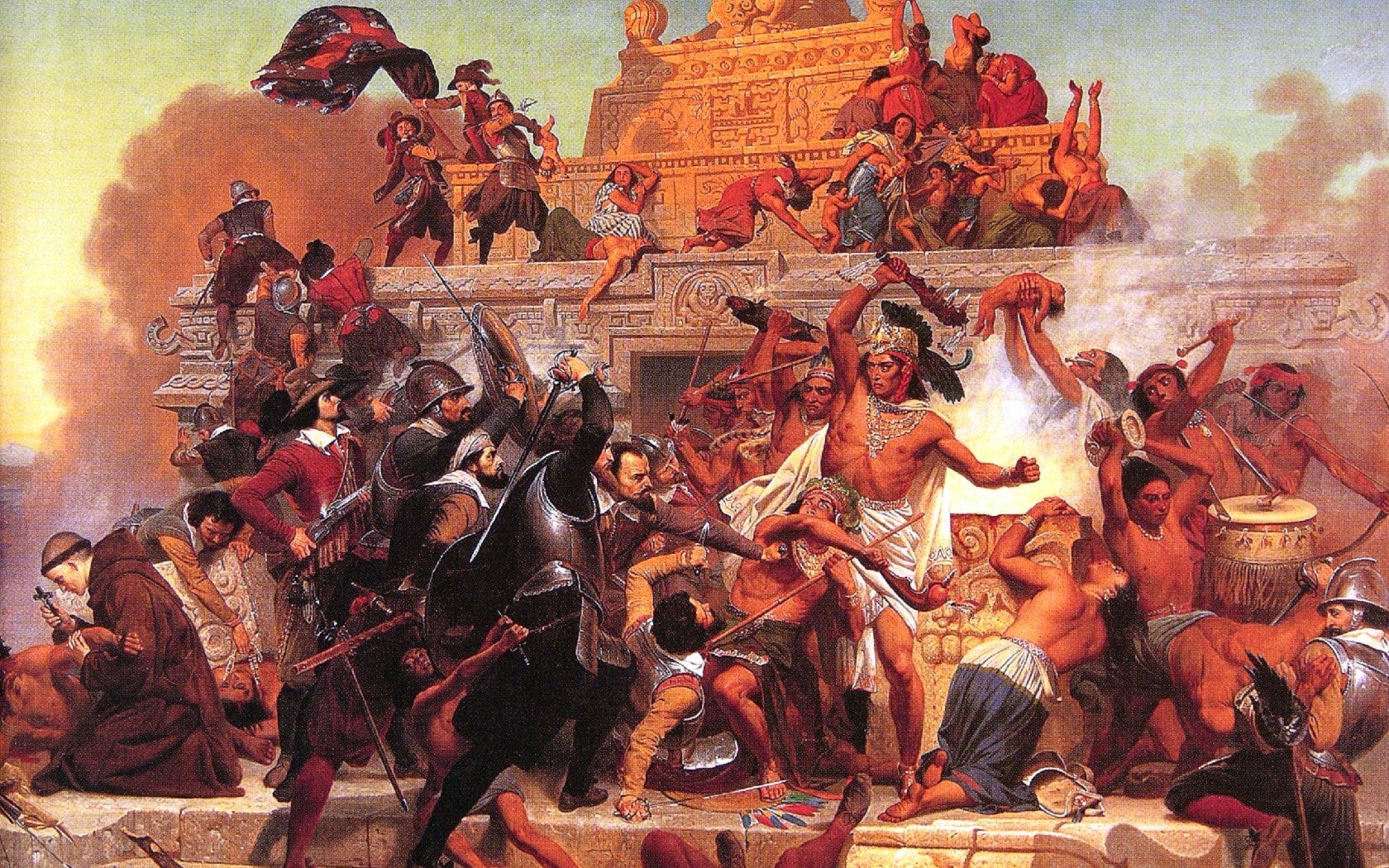
During the 2020’s “Summer of Love,” at least thirty statues of Christopher Columbus were vandalized or destroyed.
Huge crowds surrounded monuments to the explorer, dragging them down with ropes and spray-painting slogans on the rubble. News outlets found this quite inoffensive, even a relief. A Bloomburg headline from those months, instead of lamenting the destruction, reads “Why are there still 149 statues of Christopher Columbus in America?” Dozens of others echoed this sentiment - “it’s about time.” In cities where riots had flattened storefronts and historical monuments, officials gave trite speeches about “decentering white supremacist symbols” and “platforming BIPOC voices.” Removing statues of Columbus was painted as an objective moral good, even an imperative.
These speeches and articles provided very little reasoning for their claims, only citing “discomfort” and “historical prejudices.” Similarly, articles refered to the change from Columbus Day to “Indigenous People’s Day” as already settled, something that is no longer up for debate. The reader is simply expected to understand that Columbus was an evil man, who should be looked upon with scorn; that the early explorers of the New World were reprehensible figures. To look upon them with anything but derision is passe, even dangerous. One is expected to know that any discussion not based on this consensus is beyond the pale.
But this perspective on Columbus and his contemporaries is a new phenomenon, and its rapid, unilateral acceptance in education and mass media points to nothing short of a propaganda effort. […]
Christopher Columbus was a pioneer and a hero, a man we should strive to imitate rather than vilify. The story of the conquistadores is one of the most impressive military conquests in human history, and names like Cortes and Pizarro should rank alongside Alexander and Caesar. These men were models of vitality and sheer will. Bringing civilization to untamed lands is an objective moral good, a Faustian endeavor. […]

All modern slander cannot stand up to the fact that the explorers of the fifteenth and sixteenth centuries are some of the most impressive people in history. Their lives would stand as great if told to an ancient Greek, Roman, Assyrian, or Mongol. There is in the Age of Exploration a Classical sense of vitality, of excellence and triumph. […]
Because of this innate sense of Classical greatness present in the explorers and conquerors of these centuries, much effort is dedicated to making them seem banal or incompetent, unworthy of special interest beyond scorn. Besides slander of their motives - most often a reduction to the simple drive to pillage - and their religion - by calling their Christianity skin-deep, a mask under which they concealed raw greed - historians and culture warriors have a particular tendency to dismiss the Age of Exploration as being dominated by men who were boring … which in historical education is perhaps the greatest sin of all.
But Columbus and the explorers that followed him to the New World were anything but boring. Their lives and adventures are worthy of dozens of blockbuster movies, and it is merely politics that prevents their lives from being well-known today. These explorers demonstrated the same drive and talent as Alcibiades or Themistocles, yet have been unjustly filed into the dustbin of history in a blatant propaganda effort. […]
Here, I would like to discuss an alternative view of Columbus, something that hints at a greater sense of genius than even the pre-Zinn [leftist revisionist] description of his voyage.
That is: the idea that Columbus knew from the beginning where he was going.
This view stands in stark contrast to the commonly-accepted story of Columbus, which (moralizing and propaganda aside) asserts that he aimed to find a passage to Asia via travelling west. This route was based on Columbus’ own geographical calculations, which cut the diameter of the Earth nearly in half. […]
But there is a compelling case to be made for the idea that he did not, in fact, set off in 1492 for an Asian trade route; that his proposal was intentionally and obviously farcical, meant to conceal his true knowledge. […]
By the late fifteenth century, scholars knew well the size of the Earth, with astonishing accuracy given their technology. In fact, the first approximate calculations of the Earth’s circumference had been done by Eratosthenes - over a century before the birth of Christ! Even when his work was lost in the West, monks during Late Antiquity and the Middle Ages had completed and verified similar calculations, based on astronomical observations; additionally, Muslim scholars had come to similar conclusions during the Islamic Golden Age.
All of these calculations were widely available to scholars in Portugal and Spain, and well-known among the court astronomers and cartographers who rejected Columbus’ premise. It was instantly and obviously absurd to anyone with a serious education.
Traditionally, this absurdity is explained by asserting that Columbus just “wasn’t that good” at math or cartography. Considering his lifetime of naval success and career as a cartographer, as well as his impressive navigation across the Atlantic, this is a weak explanation. At best, it is hand-waving to fill gaps in the historical record. The alternative explanation requires some context as to the politics surrounding naval exploration in the late 1400s. […]
The culture among sailors for each nation, particularly in Portugal and Spain, was one of entrepreneurial spirit, national pride, and ruthless competition. Naval exploration was dangerous and expensive, but incredibly lucrative; each expedition funded by the crown functioned something like a modern startup. Each proposed voyage was a venture seeking millions in investment, for a high-risk endeavor with a potentially massive upside.
In this unpredictable environment, inside knowledge and personal reputation reigned supreme. Astronomical charts, trade winds, currents: these were industry secrets, and important matters of personal and national security. Many discoveries were kept under lock and key, or only shared by word of mouth. Personal recommendations meant everything. The entire culture of captains, court scholars, and royal investors was thus one of high trust and extreme concern. Imagine a group of modern venture capitalists, their analysts in tow, considering the latest proposal of someone who’s had a dozen successful startups and exits; this was the situation between Columbus and the Portuguese, then Spanish, royal court.
It was in this environment that Columbus made his proposal, which was immediately recognized as ridiculous. His claims about the size of the Earth were demonstrably false; and, even if they were true, the distance of the voyage stretched the limits of publicly-known sailing techniques.
On top of this, Columbus asked for laughably generous terms. Namely, he requested a 10% share of all ongoing trade along his route, as well as governorship of any lands conquered in the voyage. By contemporary standards, this was a massive ask. […]
Additionally, the idea that Columbus would conquer lands in East Asia was bold, to say the least. From the writings of Marco Polo and dozens of other sources, scholars of Columbus’ day (and Columbus himself) knew that East Asia was controlled by vast, powerful empires, none of which he could conquer with a few lightly-armed men, thousands of miles from support.
So, in total: Columbus’ math was drastically wrong, his terms were absurd given the stated goals of the voyage, and these goals made very little sense in context. What are investors meant to conclude from this?
That Columbus knew something he wasn’t letting on.
His proposal was intentionally ludicrous. Columbus was not a person prone to rash reasoning or sloppy thinking, and his recommendations said as much. These letters were high accolades from prior investors and associates, an introduction which gave him an audience at the Spanish royal court. They knew he was competent. So, the intended inference was that he presented this farcical theory to conceal something only he knew - some inside edge he couldn’t publicize. […]
But where did Columbus get this idea? What actually was his insider information?
This is where we see a deeper genius in Columbus, and get a better sense of the brazen courage involved in his voyage across the Atlantic. His pieces of evidence for the New World, when taken alone, were little more than legends and rumors. But, when taken in combination and approached with rigor, they provide a more comprehensive image of his voyage as a highly intentional act, based on rumors and legends carefully examined and combined into a groundbreaking revelation. […]
Myths, legends, rumors. Vague notions of something being out there, but without a clear guide. When Columbus’ thinking is understood in this more complete context, his note in the margins of Imago Mundi takes on a decidedly different tone:
There is no reason to believe that the ocean covers half the world … Not because the Earth is half-sized, but because there is something there!
Don’t let revisionist Leftist pseudo-historians taint your understanding of Columbus. He was a Great Man, in the truest sense of the word. A hero, embarking upon an epic quest of mythic proportions, journeying steadfastly towards vast untamed vistas on the horizon. The small-souled bugman cannot contemplate such an individual, which is why we must memorialize him.
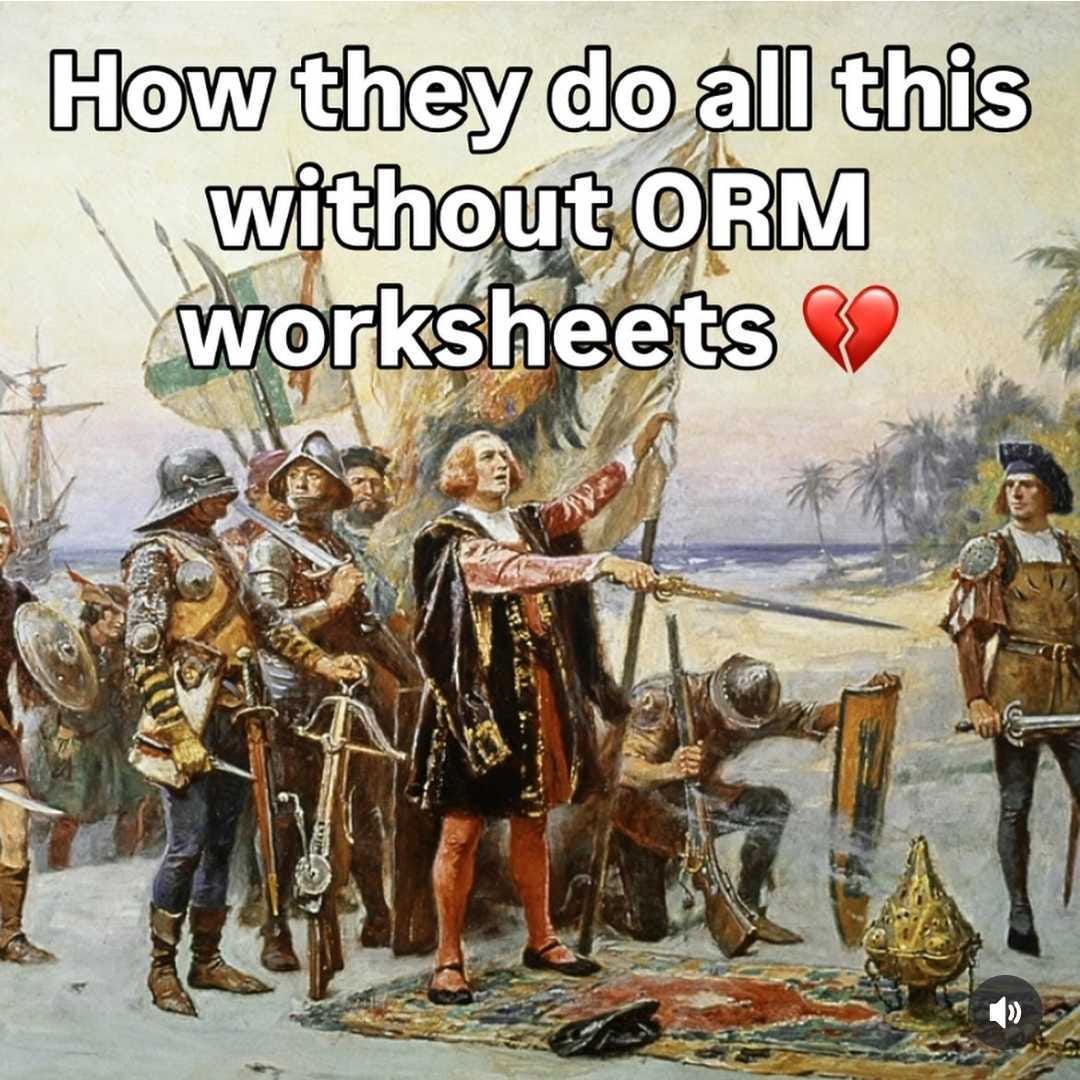
I will leave you with this quote from Samuel Eliot Morison’s seminal history of Columbus, Admiral of the Ocean Sea:
Other discoveries there have been more spectacular than than of this small, flat sandy island that rides out ahead of the American continent, breasting the trade winds. But it was there that the Ocean for the first time “loosed the chains of things” as Seneca had prophesied, gave up the secret that had baffled Europeans since they began to inquire what lay beyond the western horizon’s rim. Stranger people than the gentle Tainos, more exotic plants than the green verdure of Guanahani have been discovered, even by the Portuguese before Columbus; but the discovery of Africa was but an unfolding of a continent already glimpsed, whilst San Salvador, rising from the sea at the end of a thirty-three-day westward sail, was a clean break with past experience. Every tree, every plant that the Spaniards saw was strange to them, and the natives were not only strange but completely unexpected, speaking an unknown tongue and resembling no race of which even the most educated of the explorers had read in the tales of travelers from Herodotus to Marco Polo.
Never again may mortal men hope to recapture the amazement, the wonder, the delight of those October days in 1492 when the New World gracefully yielded her virginity to the conquering Castilians.
Bernal Díaz del Castillo writes in his chronicles that their accomplishment has no comparison with other feats. He compares Hernán Cortés to Caesar and Alexander.
However, Cortés was not alone. He was accompanied by three other great captains: Pedro de Alvarado (brilliant but somewhat impulsive), Cristóbal de Olid (a great captain who ultimately betrayed him), and the greatest, yet most forgotten, of Cortés' captains: Gonzalo de Sandoval.
The Battle of Tenochtitlan was a strategic masterpiece. Cortés' army secretly dug a three-kilometer channel to launch the brigantines he was building, keeping them out of reach of the Aztec canoes. This ingenious move transformed the final siege into an amphibious assault.
Great piece man! And I’ve recently been wondering how accurate the prevailing narrative on the discovery of the New World is. I came to a similar conclusion, that there seems to have been more knowledge of oceanographic conditions then we have been led to believe. Though I arrived at this from reading the accounts of Mansa Musa’s stay in Cairo in the 1300s. Basically he told the governor of Cairo that his predecessor abdicated the throne to set out into the Atlantic with 2000 ships after a previous expedition returned with word of a “river in the ocean” (Canary Current?). They certainly had access to texts of the Islamic golden age at a minimum, but I also wonder if they were aware of some sort of rumor/knowledge that the Atlantic doesn’t cover half the planet.